
Sourcing Genuine Diesel & Auto Engine Parts for Caterpillar 3126 and 3204 Models
Heavy equipment operators understand that engine failure in the middle of a project can cascade into schedule delays, cost overruns, and strained client relationships. For those running Caterpillar 3126 and 3204 diesel engines in construction machinery, the choice between genuine diesel & auto engine parts and aftermarket alternatives often determines whether a repair restores full performance or introduces new vulnerabilities. These two Caterpillar models, though built for different eras of emission standards and power demands, share a common requirement: replacement components must match the precision and material specifications that allowed these engines to operate reliably under extreme loads.
The 3126 and 3204 engines represent distinct phases in Caterpillar's diesel engineering. The 3204 is a mechanically injected, naturally aspirated design used extensively in smaller excavators and loaders from the 1980s through the early 2000s. The 3126, introduced in the mid-1990s, brought electronic fuel injection and turbocharging to meet stricter emissions regulations while delivering higher power density. Despite their differences, both engines operate in environments where heat, vibration, and contamination test every component. A cylinder head or crankshaft that deviates from original tolerances can compromise compression ratios, increase friction, or alter combustion timing in ways that reduce efficiency and accelerate wear.
Why Component Precision Matters in Diesel Engine Rebuilds
Diesel engines convert fuel into mechanical energy through tightly controlled combustion events. In the 3126 and 3204, peak cylinder pressures can exceed 2,000 psi, and exhaust gas temperatures routinely reach 1,200°F. These conditions demand components manufactured to exact dimensional tolerances. A cylinder head with even a 0.005-inch deviation in deck flatness can create uneven clamping forces on the head gasket, leading to coolant leaks or combustion gas blowby. Similarly, a crankshaft with out-of-spec journal diameters will cause uneven oil film thickness in the bearings, accelerating metal-to-metal contact and eventual seizure.
Genuine diesel & auto engine parts are produced to meet the original equipment manufacturer's specifications, which account for thermal expansion, load cycling, and the specific metallurgy required for each component. For the 3126, this includes parts designed to handle the higher thermal stress introduced by turbocharging and electronic injection. For the 3204, it means maintaining the looser tolerances acceptable in naturally aspirated engines while preserving the durability needed for long service intervals. Aftermarket parts may match basic dimensions but often use different alloys or casting processes that alter how the component responds to heat and stress over thousands of operating hours.
Critical Components in 3126 and 3204 Engine Overhauls
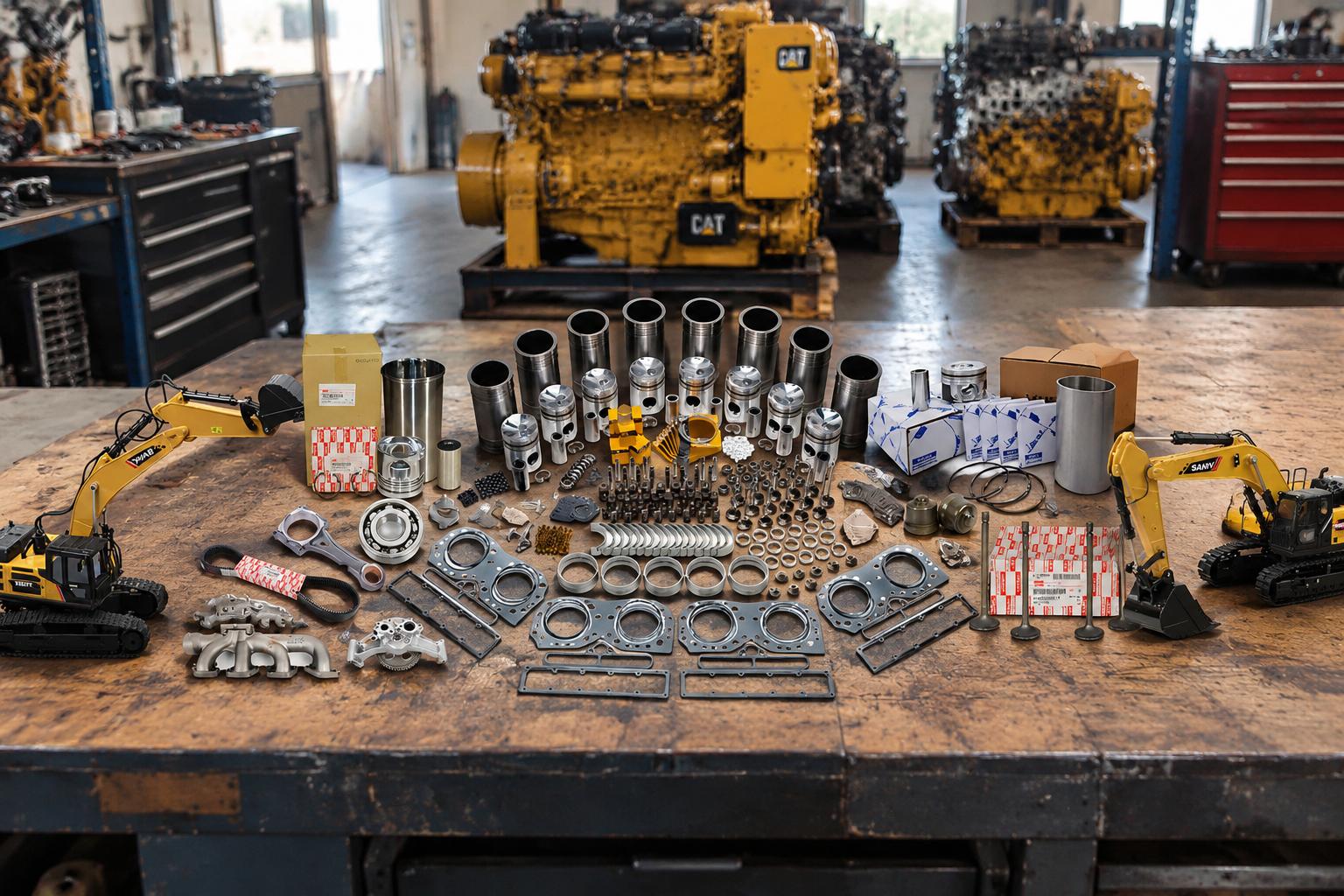
When rebuilding a Caterpillar 3126 or 3204, certain components carry disproportionate impact on overall engine reliability:
- Cylinder heads: Cast iron construction with integrated valve seats and coolant passages. Flatness across the deck surface and proper valve guide clearances are non-negotiable for maintaining compression and preventing oil consumption.
- Crankshafts: Forged steel with hardened bearing journals. Proper journal diameter, roundness, and surface finish determine bearing life and vibration characteristics.
- Pistons and liners: Matched sets where piston-to-liner clearance controls oil consumption and blowby. The 3126 uses aluminum pistons with steel cooling galleries, while the 3204 relies on simpler cast designs.
- Connecting rods: Forged steel with precise big-end and small-end bore dimensions. Stretch and fatigue resistance prevent catastrophic failure under peak combustion loads.
- Camshafts and followers: Hardened surfaces that control valve timing. Wear in these components directly affects valve lift and duration, altering combustion efficiency.
Each of these parts interacts with others in ways that amplify small deviations. A crankshaft with slightly undersized journals may function adequately with oversized bearings, but if those bearings lack the correct crush or eccentricity, oil pressure will drop and temperatures will rise across the entire lower end.
Material Specifications and Their Impact on Longevity
The choice of materials in engine components is rarely arbitrary. Caterpillar specifies certain cast iron alloys for cylinder heads because they provide thermal conductivity, wear resistance, and machinability in proportions that balance manufacturing cost and service life. These alloys contain specific percentages of carbon, silicon, and other elements that control grain structure and hardness. Aftermarket suppliers may substitute materials that appear similar but respond differently to thermal cycling, leading to microcracking or distortion after several hundred hours of operation.
Crankshafts illustrate this principle clearly. Genuine parts use forged steel that has been heat-treated to achieve a hardened surface layer while maintaining a tougher, more ductile core. This combination resists surface wear from bearing contact while absorbing the cyclic bending loads imposed by combustion forces. Cast crankshafts, sometimes found in budget aftermarket options, lack this toughness gradient and are more prone to fatigue cracks that originate at stress concentrations like fillet radii.
For the 3126, which operates at higher specific output than the 3204, material differences become even more critical. Turbocharging increases peak cylinder pressures and introduces thermal gradients that mechanically injected engines rarely experience. Components must resist not only higher loads but also the thermal fatigue that comes from repeated heating and cooling cycles as the engine moves between idle and full power.
Identifying Suppliers of Genuine Diesel & Auto Engine Parts
The aftermarket for Caterpillar parts is crowded with suppliers offering varying levels of quality and traceability. Distinguishing genuine components from well-packaged substitutes requires attention to sourcing, documentation, and physical inspection. Authorized dealers maintain direct relationships with manufacturers and can provide part numbers that cross-reference to Caterpillar's own systems. For instance, companies like Marun, which hold certifications as genuine parts agencies, source components through verified supply chains that include quality control audits and material certifications.
Physical inspection offers additional verification. Genuine parts typically include casting marks, heat lot numbers, or other identifiers that trace back to the foundry or machine shop. Surface finishes should be consistent, with no obvious porosity in castings or rough machining marks that suggest cost-cutting in production. Packaging should include part-specific labels, installation instructions, and warranty information that aftermarket suppliers often omit.
For operators rebuilding engines in remote locations or under tight schedules, the risk of installing a defective part often outweighs the price difference between genuine and aftermarket options. A failed cylinder head gasket two weeks after installation can cost more in downtime and repeat labor than the initial savings from choosing a cheaper part.
Technical Considerations for 3126 Electronic Systems
The 3126 introduced electronic control to the Caterpillar mid-range engine lineup, using a Hydraulic Electronic Unit Injector (HEUI) system that modulates fuel injection timing and quantity based on sensor inputs. This architecture means that mechanical components like injectors, sensors, and wiring harnesses must meet tighter specifications than their predecessors in the 3204. An injector with incorrect spray pattern or opening pressure will cause the electronic control unit to compensate in ways that alter fuel economy, emissions, and power delivery.
Genuine injectors for the 3126 undergo flow testing and calibration before shipment to ensure they deliver fuel within a narrow band of variation. Aftermarket injectors may lack this individual calibration, leading to cylinder-to-cylinder imbalances that increase smoke, reduce efficiency, and accelerate wear on pistons and rings. Similarly, sensors like the camshaft position sensor or coolant temperature sensor must provide accurate signals to prevent the ECU from entering limp mode or applying incorrect fuel maps.
Operators rebuilding 3126 engines should prioritize genuine electrical and fuel system components even if they accept aftermarket parts for structural elements like housings or brackets. The interaction between mechanical precision and electronic control leaves little margin for approximation.
Comparing 3204 and 3126 Parts Interchangeability
Despite both engines carrying the Caterpillar nameplate, the 3204 and 3126 share almost no interchangeable parts. The 3204 displaces 4.4 liters across four cylinders, while the 3126 displaces 7.2 liters across six cylinders. Bore, stroke, bearing sizes, and valve train geometry differ fundamentally. Operators managing mixed fleets must maintain separate inventories and avoid the temptation to substitute parts based on superficial similarities.
This lack of interchangeability extends to wear patterns and failure modes. The 3204, with its simpler mechanical injection, tends to fail through wear in the injection pump or governor rather than electronic faults. The 3126, with its electronic control and higher specific output, experiences more failures related to sensors, injectors, and turbocharger components. Understanding these differences helps prioritize which genuine parts to stock and which suppliers to cultivate for fast delivery.
Table: Key Specifications Comparison
| Parameter | Caterpillar 3204 | Caterpillar 3126 |
|---|---|---|
| Displacement | 4.4 liters | 7.2 liters |
| Cylinders | 4 inline | 6 inline |
| Aspiration | Naturally aspirated | Turbocharged |
| Fuel system | Mechanical injection | Electronic HEUI injection |
| Peak power range | 60-100 HP | 170-350 HP |
| Typical application | Small excavators, loaders | Mid-size excavators, trucks |
Maintenance Practices That Extend Component Life
Even genuine diesel & auto engine parts will fail prematurely if subjected to inadequate maintenance. Oil analysis programs can detect wear metals like iron, copper, and lead before they indicate catastrophic failure, allowing operators to schedule overhauls during planned downtime rather than in response to breakdowns. For Caterpillar engines, oil sample intervals of 250 to 500 hours provide sufficient data to track trends without excessive testing costs.
Coolant maintenance receives less attention but matters equally. The 3126 and 3204 both rely on liquid cooling to remove roughly a third of the heat generated during combustion. Coolant that has lost its inhibitor package through oxidation or dilution will allow cavitation erosion on cylinder liner outer surfaces and corrosion in coolant passages. Replacing coolant every 2,000 hours and using the correct inhibitor type prevents damage that no amount of genuine parts can reverse once established.
Fuel filtration deserves similar discipline. Diesel fuel contains water, dirt, and biological contaminants that can erode injector nozzles and score precision surfaces inside fuel pumps. The 3126, with its electronic injectors and hydraulic actuation system, is particularly sensitive to fuel quality. Installing fuel filters with water separators and changing them at recommended intervals prevents abrasive particles from reaching components where even microscopic damage alters performance.
Practical Considerations When Ordering Parts
Operators ordering genuine diesel & auto engine parts for Caterpillar 3126 and 3204 engines should provide complete serial numbers and part numbers to ensure correct matches. Caterpillar uses serial number prefixes to identify production changes that affect parts interchangeability, even within the same model designation. A 3126 built in 1998 may require different injectors or gaskets than one built in 2002, despite both being labeled 3126.
Lead times vary significantly based on part complexity and supplier location. Common wear items like filters, gaskets, and belts typically ship within days. Major components like cylinder heads or crankshafts may require weeks if not in stock, particularly for older 3204 engines no longer in production. Maintaining relationships with suppliers who stock genuine parts or can expedite orders from manufacturers reduces the risk of extended downtime.
Freight costs can represent a significant portion of total part cost, especially for heavy components like engine blocks or cylinder heads. Consolidating orders to reduce shipping frequency and negotiating freight terms with suppliers helps control these expenses without compromising part quality.
Recognizing When to Rebuild Versus Replace
Not every engine failure justifies a complete rebuild with genuine diesel & auto engine parts. Engines with cracked blocks, severely scored cylinder bores, or damaged main bearing saddles may cost more to repair than their remaining service life justifies. Decision criteria should include the machine's overall condition, expected remaining service hours, and the availability of replacement engines or entire machines.
For the 3204, which is no longer in production, parts availability will continue to decline as remaining inventory is consumed. Operators relying on 3204-powered equipment should consider strategic parts purchases or plan transitions to newer engine models before critical components become unobtainable. The 3126 remains better supported but is also being phased out in favor of emissions-compliant designs, making similar considerations relevant for long-term fleet planning.
Rebuild decisions should also account for labor costs and the availability of qualified technicians. A competent diesel mechanic can restore a 3204 or 3126 to like-new condition given proper parts and tools, but inexperienced personnel may introduce errors during assembly that negate the benefits of genuine components. Torque specifications, bearing clearances, and timing procedures must be followed precisely to achieve the reliability these engines are capable of delivering.
Warranty and Support Considerations
Genuine parts typically include manufacturer warranties that cover defects in materials and workmanship. These warranties provide recourse if a component fails prematurely due to manufacturing error rather than improper installation or operating conditions. Aftermarket parts may offer warranties as well, but enforcing them often requires extensive documentation and may not cover consequential damages like additional labor or lost productivity.
For operators, the value of warranty coverage extends beyond direct part replacement cost. A failed injector under warranty might be replaced at no charge, but if that failure damaged pistons or contaminated the lubrication system, the warranty may not cover those secondary repairs. Genuine parts from established suppliers reduce this risk through better quality control and more predictable failure modes when problems do occur.
Technical support represents another dimension of supplier value. Authorized dealers can provide installation guidance, troubleshooting assistance, and cross-reference services that aftermarket suppliers often cannot match. When rebuilding complex assemblies like cylinder heads or fuel systems, access to knowledgeable support personnel can prevent costly mistakes and reduce total repair time.
SUBSCRIBE
INQUIRY