
Original Isuzu Engine Parts: A Practical Guide to Sourcing Reliable Replacements
Anyone who has watched an excavator sit idle on a job site knows the real cost of a failed engine component. It is never just the part. It is the crew waiting, the rental clock ticking, the client asking when the machine will move again. Sourcing original Isuzu engine parts is less about brand loyalty and more about avoiding that exact scenario, because a mismatched crankshaft or a worn-out injector can turn a two-day repair into a two-week ordeal.
Isuzu diesel engines have earned a strong foothold in construction machinery, largely because manufacturers like Hitachi, Sumitomo, and Sany have paired them with excavators for decades. That popularity is exactly why the parts market around them is so crowded, and so uneven in quality. Knowing what separates a genuine component from a lookalike is the first step toward protecting uptime.
Why Engine Downtime Starts With the Wrong Part
Most unplanned downtime does not come from catastrophic engine failure. It comes from a chain reaction that starts with one part that does not quite fit right. A piston kit machined to slightly different tolerances, for example, can throw off compression ratios in ways that are not obvious until the engine is already running.
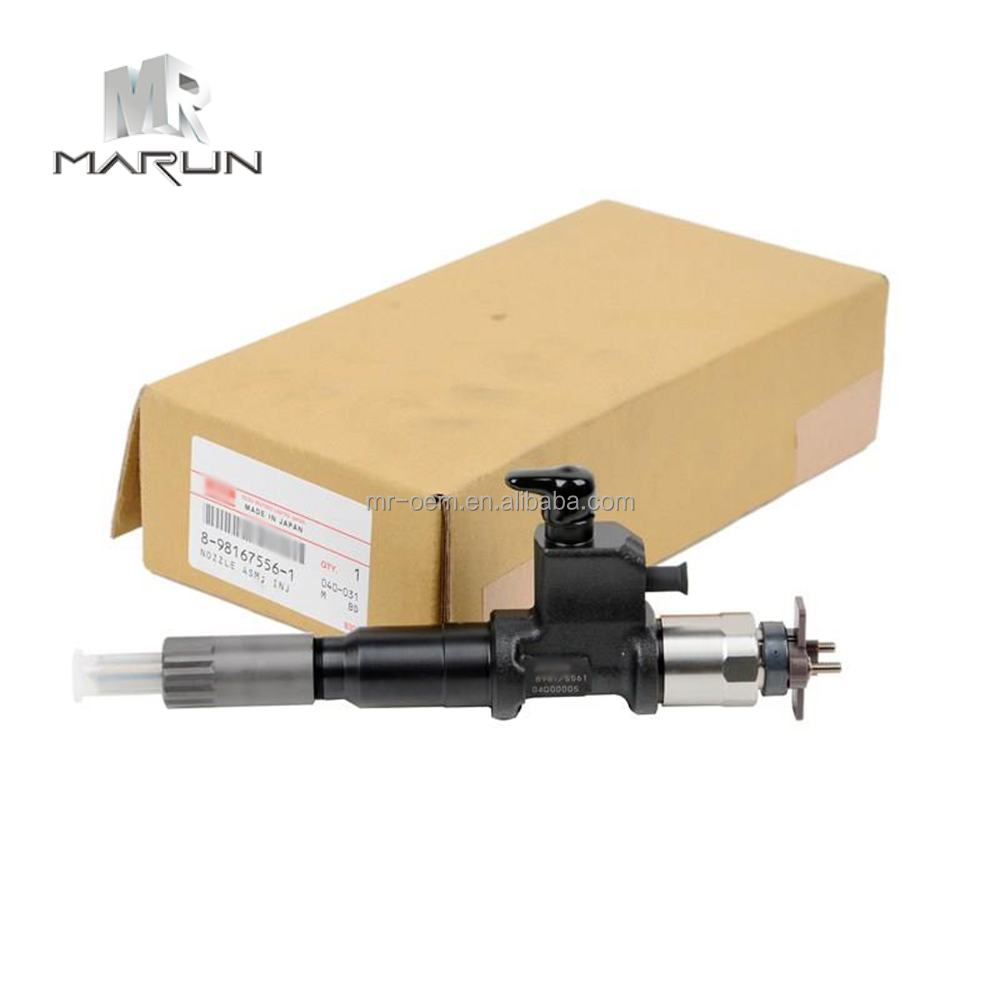
This matters more with Isuzu engines than some might expect, because the company has applied common rail fuel injection technology across much of its construction machinery lineup. Common rail systems are unforgiving of tolerance drift. A fuel injector that is even marginally off-spec can disrupt injection timing, and that ripple effect shows up later as rough idling, poor fuel economy, or premature wear on the cylinder liner.
What Makes a Part "Original" in Practice
The word "original" gets thrown around loosely in the aftermarket parts world, so it helps to be specific about what it actually means for buyers. In this context, original Isuzu engine parts refer to components sourced through channels connected to Isuzu's own supply chain, engineered to match factory tolerances rather than approximate them.
That distinction plays out in three practical ways:
- Fit accuracy — components are designed for a precise match to the original engine architecture, which reduces the guesswork during installation.
- Material consistency — parts drawn from an authentic supply chain tend to follow the same metallurgical specs the engine was originally designed around, rather than substitute alloys.
- Documentation traceability — genuine parts are easier to trace back to a specific model and production run, which matters when a fleet manager needs to justify a warranty claim.
None of this guarantees a part will outlast every use case. But it does shift the odds in favor of the buyer, especially on engines that see heavy daily cycles.
Matching Parts to the Right Engine Series
One of the more common mistakes in the field is assuming that Isuzu parts are interchangeable across series. They are not, and the naming conventions can be confusing to anyone who has not spent time cross-referencing engine codes. A part built for a 4HK1 engine will not necessarily bolt onto a 6HK1, even though the model numbers look similar at a glance.
Here is a general breakdown of where different Isuzu series tend to show up:
| Engine Series | Typical Application | Notes |
|---|---|---|
| 6UZ1, 6WG1, 6WF1, 6WA1 | Large excavators, heavy construction equipment | Common rail variants widely used in Hitachi and Sumitomo machines |
| 6HK1, 4HK1 | Mid-size excavators, commercial trucks | Frequently paired with Sany and other domestic excavator brands |
| 6BD1, 6BG1 | Older excavator and generator platforms | Still active in many fleets running legacy equipment |
| 4LE1, 4LE2 | Compact excavators, small agricultural machinery | Smaller displacement, suited to lighter-duty cycles |
| 3LD1, 3LD2, C240 | Mini excavators, light industrial equipment | Older mechanical fuel systems, simpler to service |
Before ordering any component, it is worth confirming the exact engine code stamped on the block rather than relying on the machine's brand name alone. Excavator manufacturers frequently offer the same chassis with multiple engine options, so the excavator badge tells you very little on its own.
Core Components Worth Understanding
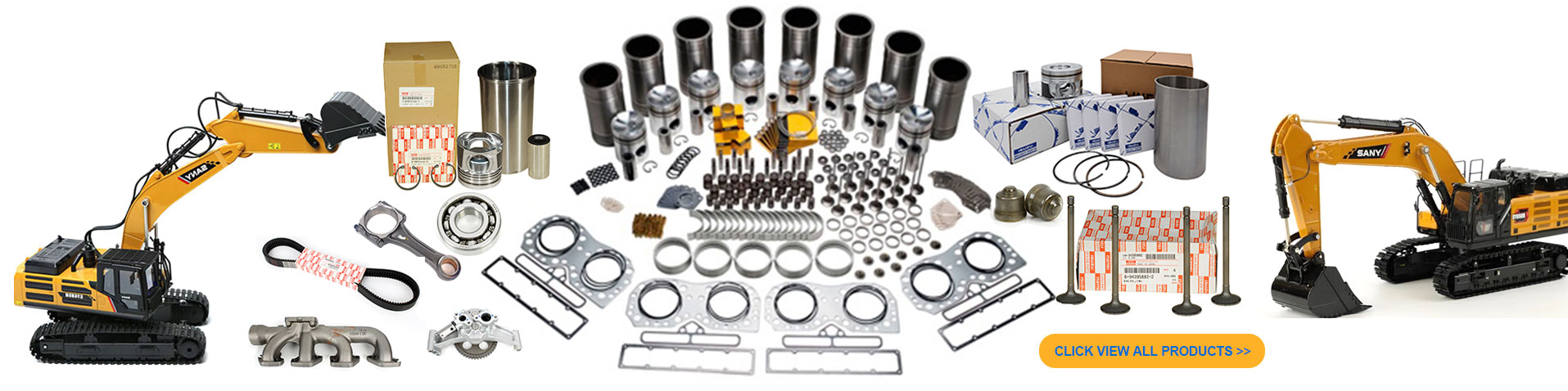
A full engine overhaul touches dozens of parts, but a handful of categories account for most of the wear and most of the buying decisions.
- Crankshafts and cylinder blocks — these form the structural core of the engine, and replacing them is usually reserved for major overhauls rather than routine maintenance.
- Fuel injectors and injection pumps — these are precision components, and on common rail engines, even minor calibration differences affect performance.
- Piston kits and main bearings — high-wear items that typically get replaced together during a rebuild, since uneven wear between the two can shorten the life of both.
- Oil seals and gasket kits — inexpensive relative to other components, but a poor seal can undermine an otherwise well-executed overhaul.
- Turbochargers, water pumps, and alternators — supporting systems that keep the engine cool, pressurized, and electrically stable.
Skipping quality checks on the smaller items in this list is a common false economy. A worn oil seal costs very little to replace but can cause a slow leak that eventually contaminates more expensive components nearby.
Sourcing Decisions: What Fleet Managers Should Weigh
Choosing where to buy engine parts is rarely just a price comparison. It is closer to a risk assessment, weighing the cost of the part against the cost of it failing at the wrong moment. A few questions tend to guide that decision in practice.
- Does the supplier carry inventory across multiple Isuzu series, or only the popular ones? Fleets running older 6BD1 or 3LD1 engines often struggle to find parts once a supplier narrows its catalog to newer models.
- Can the supplier confirm compatibility with the specific machinery brand, whether that is a Hitachi excavator or a Sany unit running an Isuzu-sourced engine?
- Is there enough stock on hand to avoid long lead times, or does every order depend on a fresh shipment from overseas?
Suppliers who maintain deep inventory and support ordering through sea and air freight from Japan tend to be better positioned to handle both routine maintenance and urgent field repairs. That flexibility matters most when a machine goes down mid-project and there is no room for a multi-week wait.
Common Questions About Original Isuzu Engine Parts
Are original Isuzu engine parts more expensive than generic alternatives?
Often, yes, though the gap varies by component. The higher upfront cost is generally offset by fewer repeat failures and less risk of secondary damage caused by a poorly fitted substitute.
Can original parts from one Isuzu series be used in another?
Generally no. Even engines that look similar externally, such as the 4HK1 and 6HK1, use different component dimensions, and cross-fitting parts can cause serious mechanical issues.
Do these parts only fit Isuzu-branded machines?
No. Because Isuzu engines are widely used by excavator manufacturers like Hitachi, Sumitomo, and Sany, genuine Isuzu components are just as relevant for those machines as they are for Isuzu-branded equipment.
What is the most overlooked part during an overhaul?
Gasket kits and oil seals are frequently underestimated. They are inexpensive, but a failure here can compromise the more expensive components installed around them.
Bringing It Back to Uptime
Every decision around engine parts eventually circles back to one thing: keeping equipment running when it needs to run. Original Isuzu engine parts are not a guarantee against every mechanical problem, but they remove a significant variable from the equation, particularly on common rail engines where precision fit matters more than it might on older mechanical systems.
For teams managing mixed fleets across Hitachi, Sumitomo, and Sany excavators, having a supplier who understands the differences between engine series, and who keeps meaningful stock on hand, tends to matter as much as the parts themselves. We work with fleets across these categories, sourcing original Isuzu engine parts and related components for overhauls, routine service, and the kind of urgent repairs that cannot wait for a slow shipment. Getting the right part the first time is still the most reliable way to keep a machine, and a project timeline, moving forward.
SUBSCRIBE
INQUIRY