
Engineering Precision: Technical Sourcing Guide for Parts for Yanmar Diesel Engines
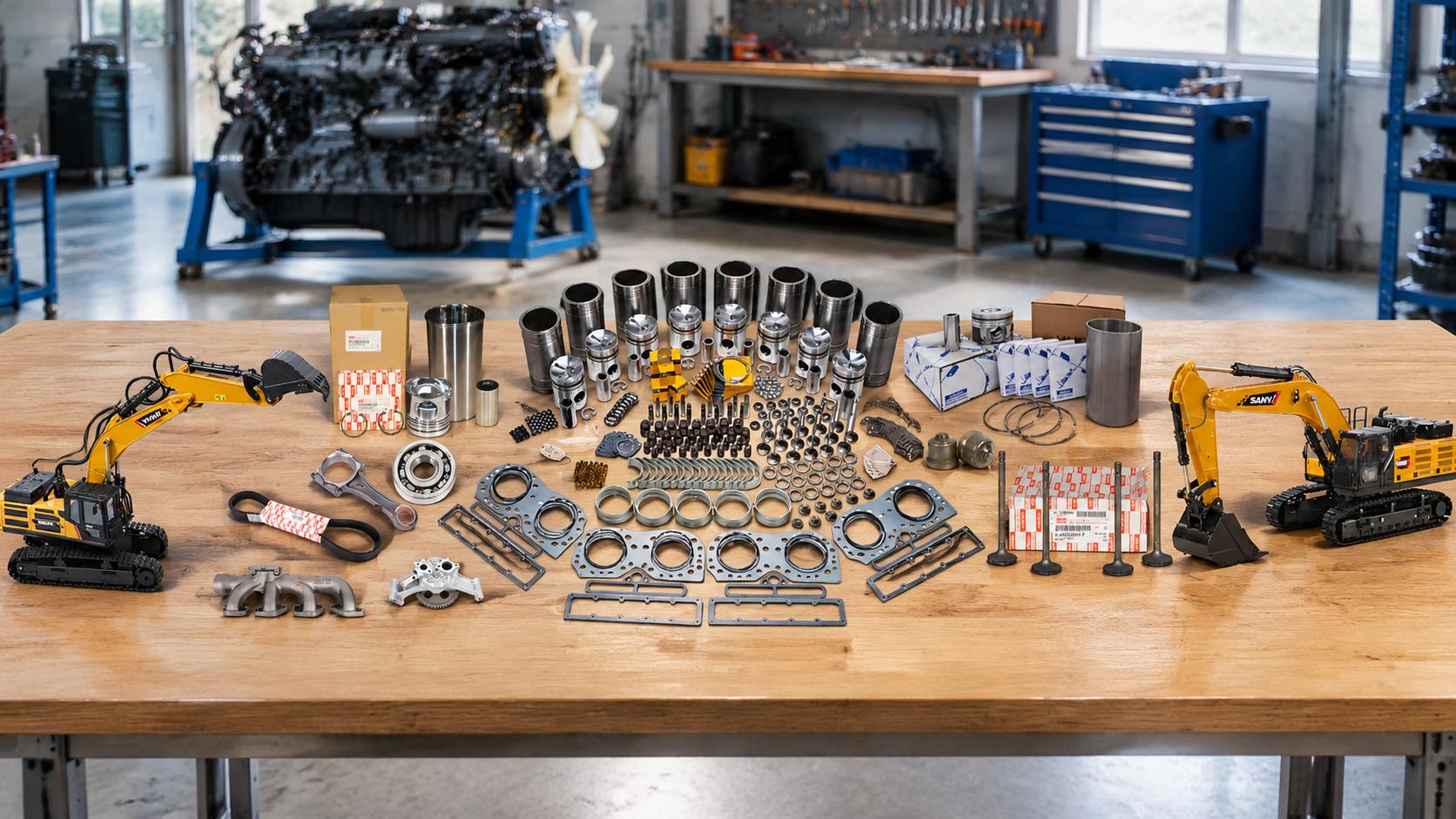
Operating compact excavators, skid steers, and stationary generators under continuous load pushes mechanical tolerances to their physical thresholds. Sourcing correctly specified parts for yanmar diesel engines helps maintain the fit, clearances, and material properties the engine was originally designed around, though actual service life still depends on operating conditions, maintenance habits, and the overall condition of the machine. Technicians and fleet managers frequently balance tight maintenance schedules against component longevity, knowing that thermal shock and abrasive particulates continually challenge industrial powertrains.
Industrial diesel power plants run on tight operating margins where minor dimensional variances produce major mechanical liabilities. A bearing clearance measured in microns, or a gasket layer rated for the wrong temperature range, can shorten an engine's working life by thousands of hours. When rebuilding or servicing these engines, success depends on understanding foundational engineering differences, matching correct metallurgical grades, and enforcing systematic installation procedures that follow the exact model's documentation rather than general assumptions.
Navigating Industrial Diesel Demands and Component Integrity
Operational Stresses in Compact Heavy Machinery
Compact excavators and mini-diggers generate severe localized thermal gradients. Unlike line-haul highway trucks that sustain steady airflow and predictable RPM ranges, compact construction machinery undergoes erratic load cycles every working shift. Rapid transitions from idle to hydraulic stall conditions subject the combustion bowl, valve seats, and wrist pin bushings to repeated heat spikes, and auxiliary hydraulic systems add to this load by sharing confined engine compartments, which raises ambient under-hood temperatures beyond what a simpler, naturally ventilated layout would see.
Under these demanding conditions, parts that do not match the engine's intended fit or material specification carry a higher risk of premature wear or poor sealing than components confirmed against the correct model and spec code. Rather than predicting a specific failure mode, the more defensible point is that nonconforming components introduce uncertainty into clearances and thermal behavior the original design did not account for, which is why verifying compatibility against the engine's documentation matters before installation.
Microscopic Tolerances and the Domino Effect of Fatigue
Machinery engines survive punishing cycles only when fluid dynamic clearances remain within the tolerance set for that specific engine model. Journal clearances that fall outside the applicable service-manual limit can disrupt the hydrodynamic oil wedge, transforming smooth hydrodynamic flotation into destructive metal-on-metal boundary contact. The exact allowable variance differs by model, so it should always be checked against that engine's own specification rather than assumed from a general figure.
When non-compliant parts enter the crankcase, failure follows a predictable chain reaction. Excessive clearance drops main oil gallery pressure, starving the top-end valvetrain. Conversely, insufficient clearance induces localized overheating, transferring bearing overlay material directly onto the crankshaft journal pin until seizure halts operation.
Preserving Combustion Pressures and Thermodynamic Efficiency
Modern diesel cycles rely on precise cylinder compression to achieve clean auto-ignition, and peak in-cylinder pressure varies with the specific engine's compression ratio, fuel delivery system, and load condition rather than following one fixed number across all industrial diesels. Because this figure is configuration-dependent, it should be referenced from that engine's own technical documentation rather than treated as a general industry constant, and the fire ring and cylinder liner interface must maintain sound structural integrity regardless of the exact value.
Escaping combustion gases, commonly called blow-by, contaminate crankcase oil with abrasive soot and unburnt fuel dilution. Fitting components that match the original equipment specification is intended to help the piston rings seat correctly, though actual seating behavior also depends on cylinder bore finish, component condition, and whether the prescribed break-in procedure is followed.
Architectural Evolution: Matching Parts across TNE and TNV Series
Structural Transitions from TNE to Total New Value Platforms
The technological transition from the earlier TNE series to the TNV, or Total New Value, platform is associated with changes to combustion chamber design and fuel-injection technology as Yanmar worked to meet tightening non-road emissions requirements. Beyond that general direction, the specific internal architecture, such as block casting details or cooling jacket layout, varies by individual model, so any comparison between the two families should be treated as a general trend rather than a fixed specification.
Technicians sometimes assume exterior dimensions imply internal interchangeability, but doing so invites mechanical interference. Combustion bowl geometry, valve count, piston skirt profile, and fuel delivery hardware all vary by specific model and specification code rather than following a single fixed pattern across the entire TNE or TNV family. The TNV range itself includes both two-valve and four-valve cylinder head designs depending on the model, so no single table of family-wide differences can be treated as universally accurate.
Because of this model-by-model variation, the safest approach is to treat any TNE-to-TNV comparison as a starting point for investigation rather than a parts-matching rule. Before ordering a piston, cylinder head, or fuel delivery component, confirm the exact engine model and specification code stamped on the data plate, then verify compatibility against that specific listing rather than assuming a feature applies across the whole series.
Platform-Specific Nuances: 3TNV70, 3TNV88, 4TNV94, and 4TNV98
Identifying your precise displacement class avoids costly ordering errors. The compact 3TNV70 uses a 70 mm bore and is commonly found in mini-excavators and subcompact utility tractors, while the 3TNV88 steps up to an 88 mm bore and 90 mm stroke on documented variants and is typically paired with mid-sized mini-diggers. These figures identify the engine's displacement class rather than predicting a specific hydraulic output, since the actual flow a machine delivers depends on its hydraulic pump, valve bank, and overall system design, not on bore and stroke alone.
In larger equipment, the 4TNV94 and 4TNV98 engines commonly appear in skid steers, heavier mini-excavators, and mobile diesel generators. The 4TNV98 shares design continuity with its 94 mm sibling but uses a larger 98 mm bore and 110 mm stroke on documented variants. These dimensions identify the displacement class and help narrow down the correct parts catalog; actual combustion pressure and output depend on the full engine configuration and operating conditions, so bore and stroke alone should not be read as a performance indicator. Cylinder heads, intake manifolds, and head bolts can differ between two-valve and four-valve variants, which makes confirming the exact model and spec code essential before ordering.
Fuel Injection Configurations: Inline, Monoblock MP, and Modern Delivery
Fuel metering across these engine platforms spans multiple mechanical paradigms. Earlier TNE units relied on individual PFR pump elements or conventional inline pumps, whereas many TNV variants adopted the MP-type distributor pump. The MP unit integrates a mono-plunger that rotates and reciprocates, helping deliver a more uniform fuel volume distribution across injector lines.
Interchanging injection components between MP and older distributor systems is generally not possible, since camshaft lobe profiles and timing advance mechanisms differ by design. Sourcing matching fuel metering components requires cross-referencing the pump data tag against the engine serial code to maintain proper injection timing.
Critical Internal Assemblies and Failure Prevention
The Rotating Assembly: Crankshafts, Rods, and Bearings
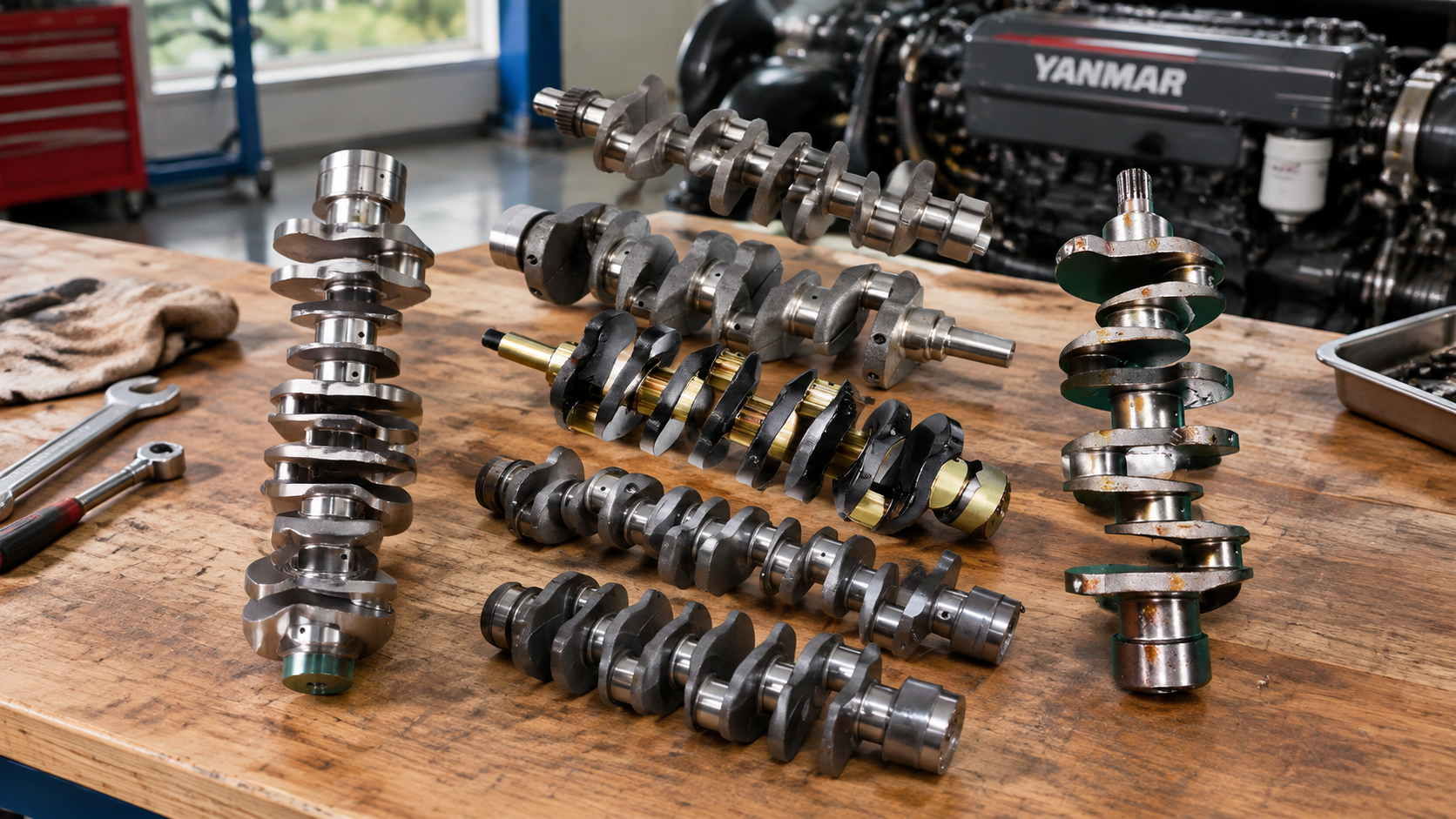
The crankshaft functions as the mechanical spine of any diesel engine, converting gas pressure into mechanical torque, and it is one of the most expensive single components to replace in a rebuild. Heat-treatment methods applied to the main and crankpin journals are specific to the individual crankshaft design rather than uniform across every Yanmar model, so the exact hardening process and resulting wear surface should be confirmed against that part's own specification sheet rather than assumed from general industry practice. What stays consistent is the functional goal: a durable, precisely dimensioned wear surface that keeps the rotating assembly running within its intended clearances.
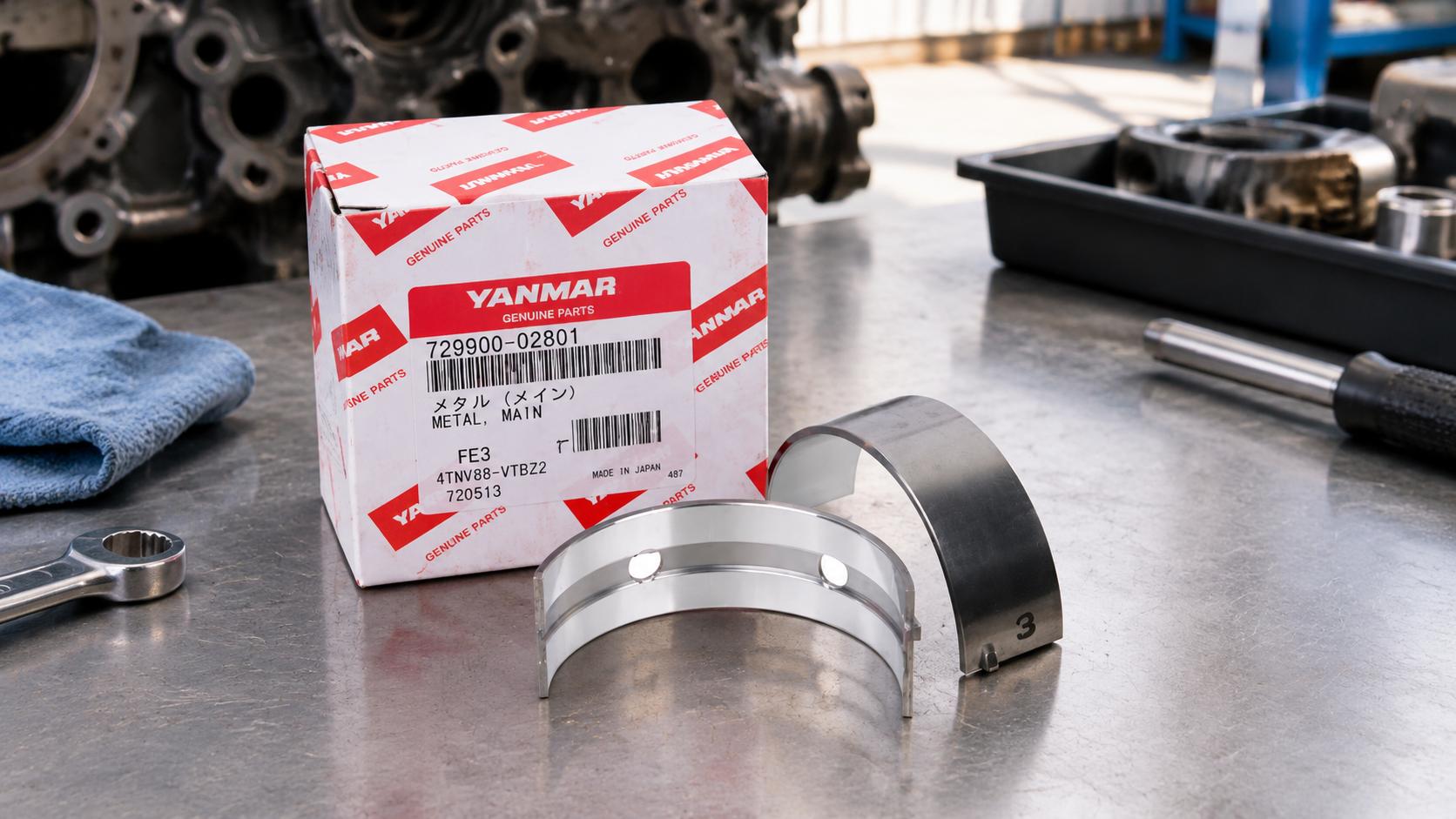
Main bearings and connecting rod shells are built from a range of constructions depending on the specific engine and bearing, and the exact layer structure, backing material, and overlay composition should be confirmed against that model's parts specification rather than assumed. In general terms across the bearing industry, a steel or similar backing layer provides structural support, while a softer bearing material is applied to the running surface to interact with the rotating journal. This general design intent typically serves three goals, which are worth understanding even though the specific execution varies by part:
-
Embeddability: a softer running surface can help absorb microscopic contaminant particles that bypass lubrication filters, reducing abrasive wear on the journal itself.
-
Conformability: a degree of surface compliance can help the bearing accommodate minor journal thermal expansion without binding the rotating assembly.
-
Fatigue tolerance: the bearing's internal structure is intended to help distribute cyclic shock loads from the power stroke into the surrounding housing.
Cylinder Head Dynamics: Valve Guides, Bridge Assemblies, and Pushrods
Four-valve variants of engines such as the 4TNV98 and 4TNV106 use a shared rocker arm acting upon an intermediate valve bridge assembly to depress dual exhaust or intake valves simultaneously. If the bridge assembly develops uneven wear, lateral side loads transfer into the valve stem, accelerating guide clearance wear.
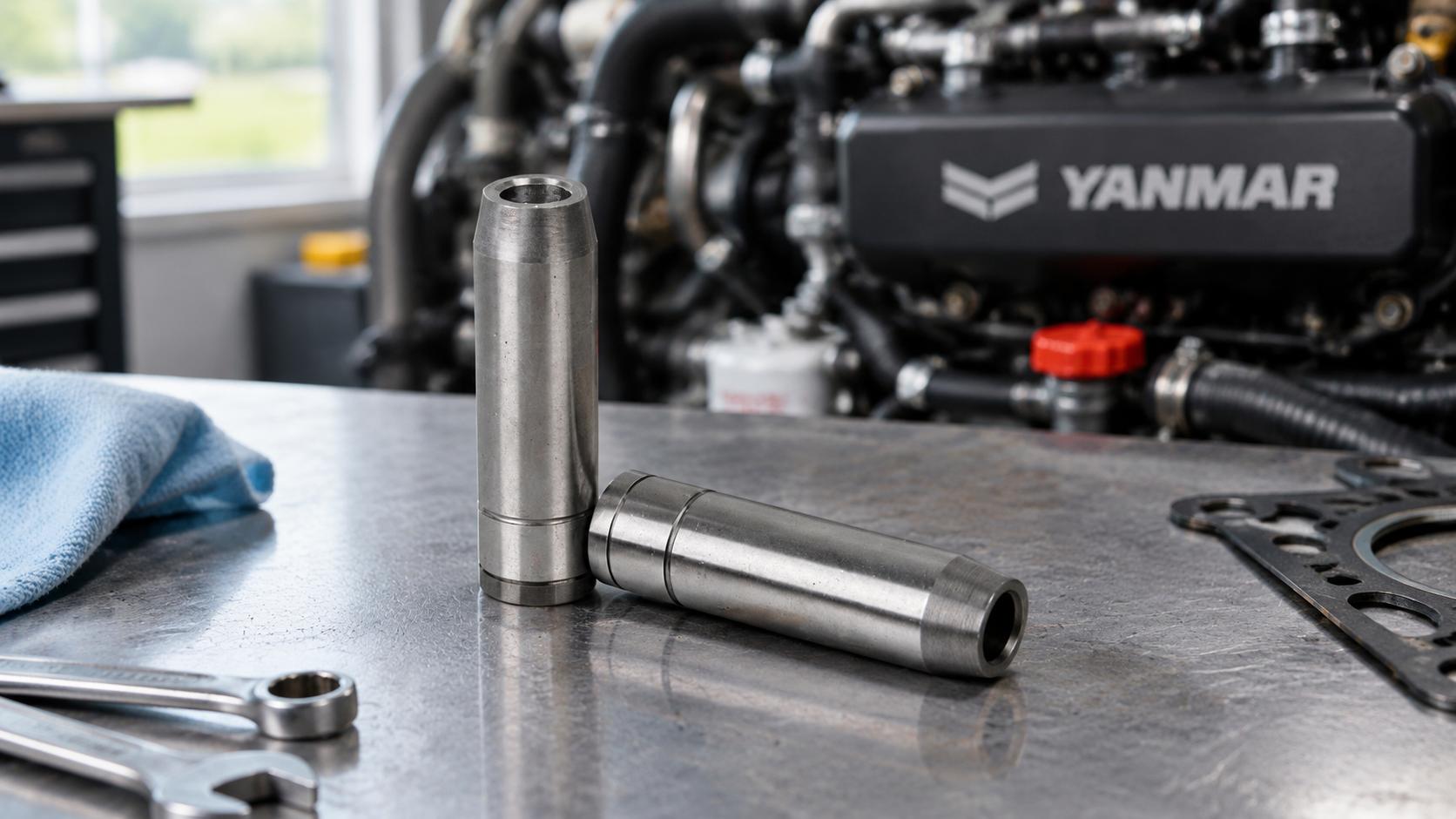
Precision valve guides feature controlled internal micro-honing that retains boundary lubricant while maintaining a stem-to-guide clearance suited to the specific engine model. That clearance should always be measured against the applicable Yanmar service specification for the exact model in question rather than a generic figure, since tolerances differ across the engine lineup. Excessive guide clearance can draw crankcase oil past the valve stem seals into the combustion bowl, contributing to carbon build-up on valve faces and eventual seat recession.
Pushrods serve as the mechanical link transmitting cam lobe movement through the block to the upper valvetrain. Under dynamic valve float or over-rev conditions, lower-grade tubular pushrods can bow permanently, skewing valve timing and degrading cylinder breathing.
Sealing Technology: Head Gaskets and Elastomeric O-Rings
Cylinder head gasket construction is application-specific, and the correct type for a given engine, whether a multi-layer steel design or another configuration, should be selected according to that exact model and specification code rather than a general industry trend. Using the gasket listed for the specific engine helps maintain the sealing tension that the head and block design was engineered around across repeated thermal expansion cycles.
Fluid transfer circuits passing between the engine block and cylinder head rely on dedicated elastomeric sealing rings, and these small components are easy to overlook during a parts order even though they sit directly in the path of pressurized oil or coolant. Installing generic nitrile seals where a fluorocarbon elastomer ring is specified can lead to premature heat degradation, resulting in oil weeping or coolant contamination that may not surface until well after reassembly.
Fuel Metering Delivery: Precision Injectors and Joint Assemblies
Fuel injectors operate in a demanding environment shaped by combustion heat, mechanical vibration, and internal pressures that can exceed 200 bar on mechanical nozzles. The nozzle needle and body assembly are typically lapped together to very fine clearances, supporting consistent pressure response and clean shutoff.
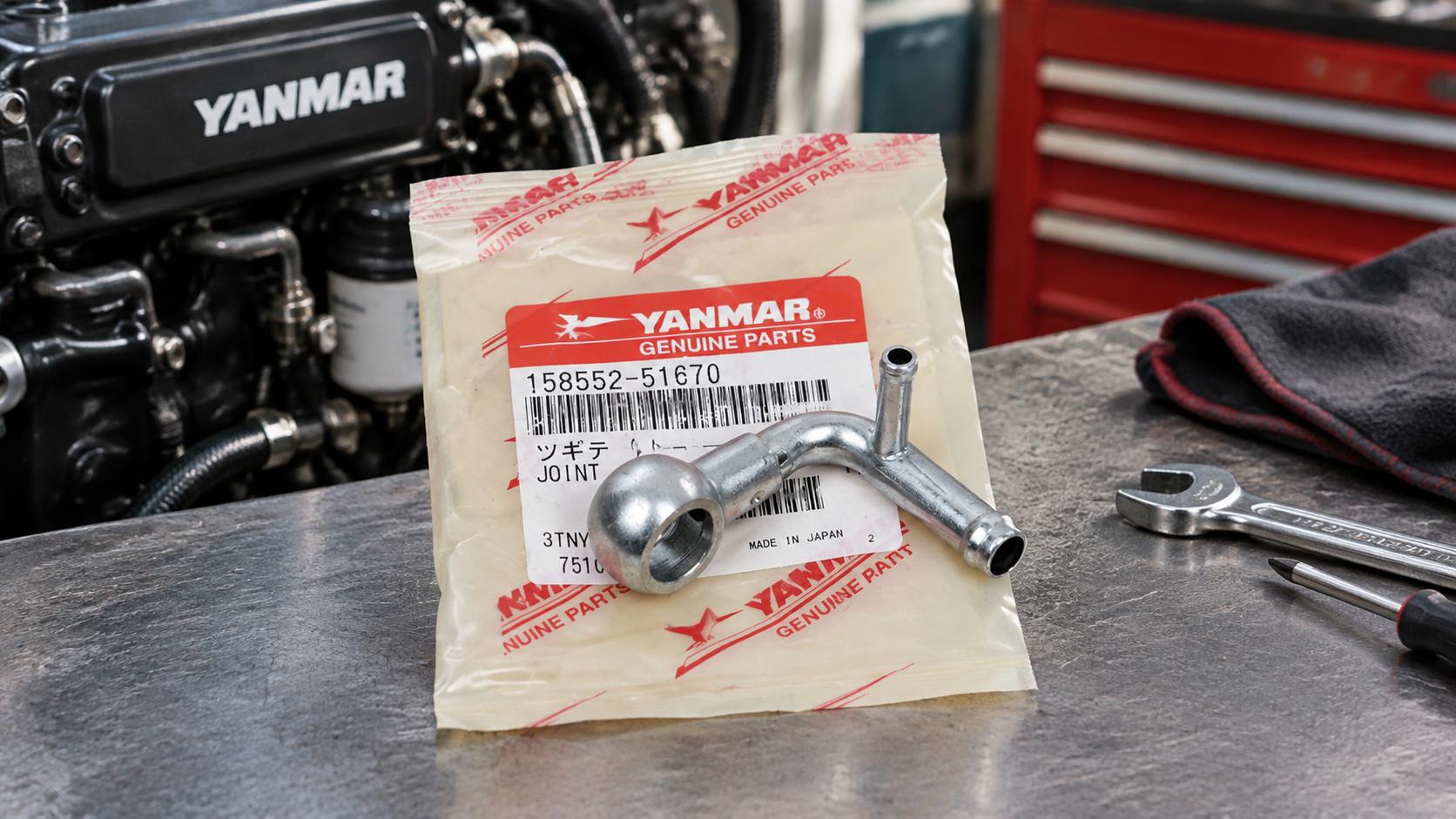
A minor leak or distorted mating face on a high-pressure fuel joint typically shows up as fuel seepage and a loss of injection pressure rather than air entering the system. Air ingress, erratic idling, and hard starting are more commonly linked to a leak or restriction on the low-pressure supply side, such as a loose fitting, a degraded hose, or a worn seal between the fuel tank and the injection pump inlet. Checking both the high-pressure joints for fuel leakage and the low-pressure supply line for air ingress gives a more accurate picture of the fault.
Rebuild Strategies: Sourcing Kits versus Targeted Overhaul Procedures
Diagnostic Thresholds: Oil Consumption, Blow-by, and Bearing Wear
Deciding between an in-frame service and a complete teardown requires systematic mechanical diagnosis rather than guesswork. The three checks below should be read as clues that point toward a likely cause, not as a standalone diagnosis, and each result needs to be interpreted against the specific engine's service-manual procedure and test conditions before any part gets ordered:
-
Crankcase pressure (manometer test): pressure that is notably elevated at full operating temperature often points toward broken piston rings or scored cylinder liners, though a clogged breather or faulty gauge can also skew the reading and should be ruled out first.
-
Dynamic oil pressure: a pressure drop at hot idle, relative to the manufacturer's specified range, suggests excessive main bearing, rod bearing, or cam bushing clearance, but low oil level, a worn pump, or a sticking relief valve can produce a similar symptom.
-
Cylinder compression differential: any cylinder deviating meaningfully from the bank average suggests valve-seat degradation or piston ring collapse, though a leaking head gasket or incorrect valve lash can also account for the gap.
In-Frame Servicing versus Complete Out-of-Frame Reconstruction
In-frame servicing addresses wear components while the engine block remains bolted within the machine frame. Technicians pull the oil pan and cylinder head to replace rod bearings, pistons, rings, and the top-end valvetrain. This approach minimizes downtime when the crankshaft journals and cylinder walls show negligible wear.
When crankpin journals show meaningful taper or the cylinder wall exhibits an excessive wear ridge beyond the manufacturer's service limit, an out-of-frame overhaul becomes necessary. The engine block must be extracted to allow precision line-boring, cylinder honing, or crankshaft grinding to factory undersizes, using the method and tolerance called for in that engine's own service documentation.
| Overhaul Stage | Target Components Required | Recommended Workshop Procedure |
|---|---|---|
| Top-End Refurbishment | Valves, guides, stem seals, bridge assemblies, head gasket | Clean carbon, cut valve seats, check head flatness against factory tolerance |
| In-Frame Overhaul | Pistons, ring sets, rod bearings, oil pump, lower gasket set | Service cylinder liners according to the model's honing specification and verify rod journal oil clearance |
| Out-of-Frame Reconstruction | Crankshaft, main/thrust bearings, full gasket kit, water pump | Clean the block using the method the service manual permits, measure line-bore alignment, replace cam bushings |
Qualified Supply Channels and Fleet Inventory Strategy
Counterfeit and unverified components in modern supply chains represent an expensive risk for fleet operators, since there is no guarantee they meet the dimensional tolerances, metallurgy, or heat treatment the original design calls for. That uncertainty alone, without needing to assume a specific failure mode, is reason enough to source only from channels that can confirm genuine origin.
Establishing a dependable pipeline for genuine parts means working with certified, accredited distributors. Guangzhou Marun Machinery Equipment Co., Ltd., operating as a wholly-owned subsidiary of Guangzhou Qipeng Machinery Equipment Co., Ltd., serves as an official dealer of Isuzu Genuine Parts, MAHLE (China), and Yanmar. According to the supplier's own inventory data, their stock supports engine platforms including the 3TNV88, 3TNV70, 4TNV106, 4TNE86, 4TNV98, and 4TNE94 series, providing repair facilities and distributors with components ranging from crankshafts and cylinder heads to overhaul gasket sets and fuel injection pumps.
Step-by-Step Assembly Protocols for Yanmar Engine Rebuilds
Rebuilding a compact industrial engine demands methodical discipline. The sequence below is illustrative of the general order technicians follow; it is not a substitute for the service procedure published for the engine's exact model and spec code, since washer orientation, ring-gap placement, gasket handling, bolt tightening methods, and valve-adjustment sequences vary across the Yanmar lineup:
-
Inspect and clean the cylinder block: clear all oil galleries with nylon brushes, blow out dry with compressed air, and confirm oil gallery plugs are tight.
-
Check crankshaft end play: seat the upper main bearings dry into the crankcase, apply assembly lube to bearing faces, and set the crankshaft in place. Install thrust washers following the orientation specified in that engine's service manual, then verify end play with a dial indicator against the manufacturer's specified range for the exact model being rebuilt.
-
Install piston and connecting rod assemblies: stagger piston ring end gaps according to the pattern specified for that engine model, keeping gaps away from load-bearing contact points as instructed. Compress rings with a tapered sleeve and guide each rod assembly into position, checking rod bolt stretch or torque angle against the factory specification for that model.
-
Secure the cylinder head: position the head gasket specified for that engine onto clean, dry dowel pins, following the manufacturer's handling instructions. Torque cylinder head bolts using the tightening method and sequence published in that model's service manual, since the required pattern, stages, and whether bolts may be reused differ across the lineup.
-
Adjust valve lash and bridge assemblies: rotate the engine to bring cylinder one to top dead center on its compression stroke, which the service manual typically identifies through a timing mark combined with checking that both valves on that cylinder are closed. Level the valve bridge contact pads before adjusting rocker screw clearances, and follow the exact sequence and clearance values published for that specific engine model rather than a general pattern, since adjusting the wrong cylinder's valves at the wrong point in the cycle can produce an incorrect setting.
Frequently Asked Questions (FAQs)
How do I identify the exact build configuration on a Yanmar engine?
Locate the metal data plate stamped onto the cylinder block exhaust side or riveted to the rocker arm cover. This plate records the complete engine model, displacement designation, and an alphanumeric spec code. Always reference the complete specification code alongside the serial number when ordering components, since auxiliary equipment such as oil pan depths, flywheel housings, and governor styles can differ across machine brands, and two engines that look identical from the outside can require different parts once that code is checked.
Can pistons and connecting rods be swapped between TNE and TNV series?
Generally no, and the exact reason depends on the specific models involved. Combustion bowl geometry, wrist pin height, and intake swirl characteristics can differ between an older TNE unit and a newer TNV unit, even when both engines look similar from the outside. Fitting a piston from one model into a different model can disrupt clean combustion, cause heavy soot accumulation, or risk mechanical valve-to-piston contact, so compatibility should always be confirmed against the specific part listing for that model and spec code rather than assumed from the series name alone.
What causes premature valve guide and valve bridge wear in 4-valve heads?
Premature wear on valve guides and bridge components often stems from improper bridge leveling, neglected oil change intervals, or excessive valvetrain clearances. When the bridge leveling screw falls out of adjustment, the rocker arm presses unevenly against one valve stem tip, applying lateral side forces to the valve guide. Over time, this side load can bell out the guide, degrade stem seals, and accelerate carbon buildup on intake and exhaust valves, which is why bridge leveling deserves a careful check at every valve adjustment interval rather than only during a full rebuild.
Do cylinder head bolts need to be replaced after every removal?
Bolt reuse depends on the engine model and its service manual. Some Yanmar compact diesels specify a staged torque procedure rather than a strict torque-to-yield method, so the correct tightening method and replacement criteria should always be checked against that specific model's documentation. Discard bolts only when the service manual calls for one-time use, or when inspection shows thread damage, stretching, or other signs that the bolt no longer meets specification.
Final Inspection and Operating Longevity
Rebuilding an industrial powertrain is an investment in machine productivity. Precision-engineered components are intended to help preserve the design tolerances that keep compact excavators, mini-diggers, and generators working as designed under heavy loads, though realized fuel efficiency, emissions behavior, and output also depend on correct installation, engine condition, and ongoing maintenance. Sourcing genuine parts for yanmar diesel engines from a verified supplier gives technicians and fleet managers a sound starting point for that work, supporting steady mechanical output through years of demanding service.
SUBSCRIBE
INQUIRY