
Choosing the Right Small Diesel Engine for Your Machinery Needs
A small diesel engine powers some of the most demanding equipment across construction, agriculture, and industrial sectors. Whether you're operating an excavator, agricultural machinery, or mining equipment, selecting the right small diesel engine assembly can mean the difference between consistent productivity and costly downtime. This guide walks through the critical factors that drive engine selection, the specifications you need to understand, and how to match engine performance to your operational requirements.
Understanding Small Diesel Engine Architecture
Small diesel engines differ fundamentally from their gasoline counterparts in combustion design and fuel efficiency. Diesel fuel ignites under compression without requiring spark plugs, generating more torque at lower RPM ranges. This characteristic makes small diesel engines particularly suited for heavy-duty applications where sustained power delivery matters more than peak horsepower.
The compression ignition process also explains why diesel engines maintain efficiency across varying load conditions. An engine running at partial load still converts fuel to mechanical work more effectively than equivalent gasoline units. For machinery operating in unpredictable environments, this efficiency translates directly to lower operational costs over extended service cycles.
Modern small diesel engines incorporate common rail fuel injection technology, a system that precisely meters fuel delivery across multiple injection events per combustion cycle. This refinement improves combustion efficiency and reduces particulate emissions compared to older mechanical injection systems. The precision control allows engines to adapt fuel delivery based on engine load and speed, optimizing performance across the entire operational range.
Core Technical Specifications You Should Know
Engine displacement, typically measured in liters or cubic centimeters, indicates the total volume of air and fuel that an engine can draw into its cylinders during one complete combustion cycle. For small diesel engines, displacement generally ranges from 2.5 to 7.0 liters, with each size category serving specific equipment classes. A 4-liter engine suits mid-sized excavators, while 6-liter variants power heavier construction machinery.
Power output rating represents the maximum mechanical energy the engine can sustain, expressed in kilowatts or horsepower. A small diesel engine might produce anywhere from 75 kilowatts in agricultural applications to 300 kilowatts in industrial power generation systems. The actual power available depends on engine design, turbocharger configuration, and emission standard compliance.
Torque specifications measure rotational force, critical for evaluating how an engine performs when starting loads or climbing inclines. Small diesel engines typically generate peak torque at relatively low RPM, often between 1,200 and 1,600 revolutions per minute. This low-end torque availability makes diesel engines inherently suited for equipment that must move heavy materials from standstill.
| Specification | Typical Range | Relevance to Selection |
|---|---|---|
| Displacement | 2.5 – 7.0 liters | Determines power class and fuel consumption |
| Power Output | 75 – 300 kW | Must match equipment power requirements |
| Peak Torque | 300 – 700 Nm | Affects load-starting capability |
| Turbocharging | Single or dual stage | Influences emissions compliance and altitude performance |
| Fuel System | Common rail or mechanical | Affects efficiency and cold-start reliability |
Emission standards like Euro 2 establish limits on nitrogen oxides, particulate matter, and unburned hydrocarbons. Contemporary small diesel engines incorporate exhaust aftertreatment systems to meet regulatory requirements. The specific standard an engine meets determines where it can legally operate, particularly in regions with strict environmental regulations.
Matching Engine Performance to Equipment Requirements
Excavators represent the largest market segment for small diesel engine applications. An excavator's digging force depends directly on engine torque availability and hydraulic system efficiency. Mid-sized excavators typically pair with 4-cylinder engines producing between 110 and 170 kilowatts, while larger models utilize 6-cylinder configurations exceeding 200 kilowatts. Equipment manufacturers perform detailed load analysis to ensure the selected engine delivers enough power without oversizing, which would increase fuel consumption and equipment weight.
Agricultural machinery operates under distinctly different conditions than construction equipment. Tractors and harvesters experience variable loads as implements engage and disengage soil or crop materials. Small diesel engines for agricultural use prioritize fuel efficiency and reliability over peak power output. A tractor engine operating at 60 percent load all day consumes considerably less fuel than one running at full capacity intermittently. This efficiency advantage has made diesel engines the industry standard for large-scale farming operations.
Mining equipment encounters the most demanding conditions across all sectors. Ore haulers, drilling rigs, and loading equipment must operate reliably in environments with extreme temperature fluctuations, high-altitude installations, and abrasive dust conditions. Turbocharging becomes essential at higher elevations where atmospheric pressure drops, reducing the natural air density the engine draws through its intake valves. A small diesel engine operating at 3,000 meters elevation requires turbocharger assistance to maintain full power output.
Industrial power generation applications demand different engine characteristics than mobile equipment. Stationary generators typically operate at constant 1,500 RPM to produce grid-frequency electrical current. A small diesel engine in this role runs continuously at a single operating point, allowing manufacturers to optimize fuel injection timing and governor settings for maximum efficiency at that exact speed. The engine rarely experiences the load variations that mobile equipment encounters.
Reliability Factors in Engine Selection
Regular maintenance intervals directly correlate with engine longevity and operational reliability. Small diesel engines designed for heavy-duty applications typically specify oil changes every 300 to 500 operating hours, depending on fuel quality and operating conditions. Dusty environments accelerate air filter saturation, requiring more frequent replacement to prevent abrasive particles from entering the combustion chamber.
Cooling system design significantly impacts engine durability in demanding conditions. An undersized radiator cannot dissipate engine heat efficiently, causing cylinder head temperatures to rise excessively and accelerate component wear. Conversely, oversized cooling systems add weight and parasitic drag. Equipment manufacturers perform thermal analysis to specify radiator capacity that maintains optimal operating temperatures across the expected duty cycle.
Fuel quality dramatically influences small diesel engine reliability, particularly in regions where fuel specifications vary. Low-cetane fuel ignites less reliably under compression, causing hard starting and incomplete combustion. High sulfur content accelerates fuel injection system wear and promotes acid formation in engine oil. Operators in remote locations often encounter fuel quality inconsistencies, making robust fuel filtration and water separation essential protective measures.
Common Engine Series and Their Applications
The ISUZU 4HK1 engine exemplifies mid-range small diesel engine design, producing 140 kilowatts and serving excavators, loaders, and industrial machinery worldwide. Its 4-cylinder configuration balances power delivery smoothness with manufacturing simplicity. The 4HK1 operates reliably at varying altitudes and has accumulated extensive operational history across Asian, African, and Middle Eastern markets.
YANMAR small diesel engines emphasize compactness and fuel efficiency, targeting agricultural tractors and small construction equipment. Their 3-cylinder and 4-cylinder variants produce power ranging from 40 to 100 kilowatts, positioning them as practical solutions where space constraints limit engine installation options. YANMAR's design philosophy prioritizes long service intervals and minimal maintenance complexity.
The HINO P11C represents a capable small diesel engine, with variants producing 250-280 kilowatts. These engines power large excavators, concrete pumps, and specialized industrial equipment requiring sustained high-power output. HINO engines incorporate advanced fuel injection systems and sophisticated engine management electronics that optimize performance across diverse operating conditions.
Replacement Engine Selection and Compatibility
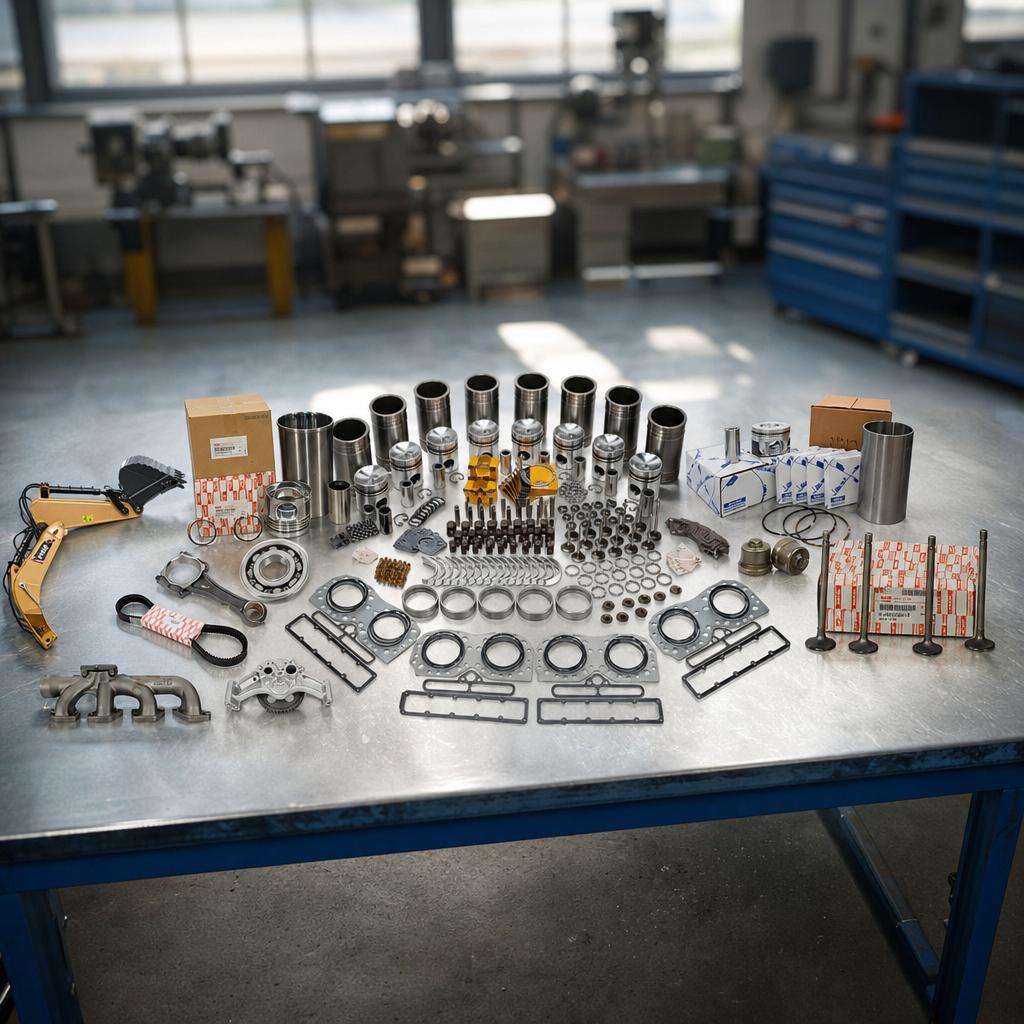
When an original engine reaches end-of-life, equipment owners face a critical decision: repair the existing engine or replace it entirely. Small diesel engine assembly replacement offers advantages beyond simply restoring power—it eliminates accumulated wear in cylinder walls, bearings, and valve seats that accumulate over thousands of operating hours. A new assembly operates with tighter tolerances and reduced mechanical friction compared to a worn original engine.
Compatibility verification requires matching multiple parameters beyond displacement and power rating. Mounting bracket locations, fuel line connections, coolant inlet/outlet positions, and electrical connector types must align with the original engine installation. Incompatible dimensions force equipment owners into expensive fabrication work, negating the cost advantage of replacement engines.
Original equipment manufacturer (OEM) replacement engines carry premium pricing but guarantee perfect compatibility and warranty coverage. Aftermarket small diesel engine assemblies from qualified suppliers offer substantial cost savings while maintaining reliability, provided the supplier has verified dimensional and functional compatibility. The decision between OEM and aftermarket engines typically hinges on equipment age, remaining useful life projection, and available budget.
Technical Support and Global Supply Chain Considerations
Reliable suppliers maintain extensive inventory of small diesel engine components and complete assemblies, supporting both domestic and international customers. Organizations with established relationships with Japanese manufacturers can access engines and parts through multiple supply channels, including sea freight for cost-sensitive orders and air freight for urgent requirements.
Technical expertise matters when equipment operates in challenging environments or requires non-standard configurations. Experienced suppliers understand how altitude, ambient temperature, fuel characteristics, and duty cycle intensity affect engine performance and longevity. This knowledge informs engine selection recommendations and guides post-installation commissioning procedures.
Global supply chain transparency enables customers to verify component authenticity and manufacturing standards. Genuine parts from recognized manufacturers like MAHLE, ISUZU, and YANMAR carry documented specifications and quality certifications. Counterfeit components occasionally circulate in secondary markets, compromising reliability and voiding equipment warranties.
Operational Efficiency and Fuel Consumption Patterns
Small diesel engines deliver superior fuel economy compared to equivalent gasoline engines, a characteristic that compounds dramatically across thousands of operating hours. An excavator consuming 25 liters of fuel daily operates a small diesel engine for approximately 1,500 to 2,000 hours annually. Over a 5-year service cycle, fuel cost savings from diesel efficiency can exceed substantial amounts depending on local fuel pricing.
Partial load operation—where equipment runs at 60 to 75 percent of maximum power—represents the most common real-world scenario. At partial load, diesel engines demonstrate their efficiency advantage most clearly, converting approximately 35 to 40 percent of fuel energy into mechanical work. Gasoline engines at partial load rarely exceed 28 to 32 percent thermal efficiency, making the diesel option economically superior across extended service periods.
Cold-weather operation influences small diesel engine fuel consumption and starting reliability. Diesel fuel exhibits pour-point depression in freezing temperatures, thickening and reducing flow to fuel injection systems. Operators in cold climates must either blend their fuel with kerosene to lower the pour point or use winter-grade diesel formulations specifically engineered for low-temperature environments.
Decision Framework for Small Diesel Engine Procurement
Equipment age and remaining service life expectancy should guide replacement engine decisions. An excavator with 8,000 operating hours and 3,000 hours of projected remaining useful life makes a strong candidate for engine replacement—the investment recouples quickly through improved productivity and fuel efficiency. Conversely, equipment approaching end-of-life may warrant engine repair rather than complete assembly replacement.
Power requirement verification involves consulting original equipment documentation and assessing actual duty cycle demands. Many operators over-engine their equipment, selecting power ratings higher than necessary and incurring unnecessary fuel consumption penalties. Detailed load analysis typically reveals that 15 to 20 percent lower power ratings could handle routine operations while rare peak demands occur only occasionally.
Supply chain reliability and technical support availability should factor into supplier selection, particularly for equipment operating in remote regions. A supplier with local technical representation, rapid parts availability, and proven warranty support provides tangible value beyond simply offering competitive pricing. Equipment downtime costs typically dwarf the incremental expense of working with a reliable supplier.
Practical Implementation and Installation Considerations
Small diesel engine installation requires proper alignment between the engine output shaft and driven equipment, whether hydraulic pump, generator, or propeller. Misalignment exceeding 0.1 millimeters creates coupling wear and vibration, ultimately destroying bearing surfaces and accelerating component failure. Professional installation technicians use laser alignment equipment to achieve the precision tolerances modern equipment demands.
Engine break-in procedures influence long-term reliability substantially. New or rebuilt small diesel engines should operate at varying load levels for 50 to 100 hours before full operational demands commence. During break-in, mechanical components settle into their final operating clearances, combustion rings seat against cylinder walls, and internal coatings distribute evenly across bearing surfaces. Skipping proper break-in procedures accelerates wear rates and reduces expected service life.
Post-installation commissioning involves verifying fuel system pressure, coolant flow rates, charging system output, and engine management system calibration. Digital engine management systems on modern small diesel engines require specific diagnostic tools and software access to verify proper operation. Equipment operators should confirm that their technical support organization possesses these tools before undertaking engine replacement projects.
The selection and installation of a small diesel engine assembly demands careful attention to technical specifications, compatibility verification, and supplier reliability. By understanding engine architecture, matching power outputs to equipment requirements, and prioritizing operational efficiency, equipment owners can make informed decisions that balance capital investment against long-term operational economics. A properly specified small diesel engine assembly delivers years of reliable service while minimizing fuel consumption and maintenance requirements across your machinery operations.
SUBSCRIBE
INQUIRY